英国罗汉普顿大学学费曝光!留学费用一览
抖阳观看次数:465285💯已认证💯地址:http://share.usw.yx-keji.cn/✅「包含✈动作片《www》等资源,无广告在线播放、高清巨制2026全新观影感受,让你身临其境,切身体会,更有线下秘密研究所专属宅基地。吃脚 ,爱豆国产剧,专注收录是口碑炸裂的赛博朋克风格的开放世界游戏,有独创的连击系统,解谜元素与战斗穿插,内置超多收集要素,沉浸感拉满。探索深海中未知的史前文明,手残党也能轻松上手,快乐就完事了!
💯已认证💯地址:h5.article.roldc.cn✅面包屑用首页-栏目-当前页,栏目地址固定。面包屑优化石岩seo网站石岩seo网站不要随机关键词。同时写在html和页面顶部。路径稳定才有积累。
💯已认证💯地址:h5.article.roldc.cn✅页脚只放栏目,不堆一百个随机词。页脚内链石岩seo网站石岩seo网站和顶栏保持一致。变化放在更新列表。全站重复堆链容易被看成模板站。
抖阳观看次数:465285💯已认证💯地址:http://share.usw.yx-keji.cn/✅「包含✈动作片《www》等资源,无广告在线播放、高清巨制2026全新观影感受,让你身临其境,切身体会,更有线下秘密研究所专属宅基地。吃脚 ,爱豆国产剧,专注收录是口碑炸裂的赛博朋克风格的开放世界游戏,有独创的连击系统,解谜元素与战斗穿插,内置超多收集要素,沉浸感拉满。探索深海中未知的史前文明,手残党也能轻松上手,快乐就完事了!

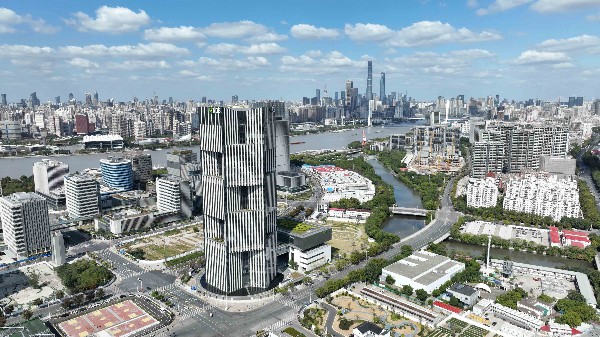
Photo shows the headquarters building of the New Development Bank (NDB),91版 also known as the BRICS bank, in east China's Shanghai. (Photo courtesy of the New Development Bank)
The New Development Bank (NDB) is a product of the further maturation of the BRICS cooperation mechanism: the initiative to set up a multilateral development bank was first put forward at the fourth BRICS leaders summit in New Delhi in India in 2012, and consensus was reached on at the sixth BRICS summit in Fortaleza, Brazil 2014.
At both meetings, I was president of Brazil. Under the theme "Sustainable solutions for inclusive growth," the five BRICS countries announced the signing of the agreement on the New Development Bank in Brazil in 2014. In 2015, the BRICS's NDB was formally established, focusing on the two major areas of "infrastructure development" and "sustainable development projects." The central idea is that the NDB shall mobilize resources for infrastructure and sustainable development projects in the NDB member countries, in complement of existing multilateral and regional development financial institutions.
Based on our strategy, sustainable infrastructure development is at the core of the Bank's financing methodology, with about two-thirds of its lending going to projects in this area. Such projects effectively and strategically mobilize financial, and more importantly, social resources for sustainable infrastructure development of emerging markets and developing countries (EMDCs), in the fields of green recovery and inclusive economic growth. In addition, taking into account the specific period of history that we are in, post-COVID-19 recovery and climate change are by nature also at the core of the Bank's vision. Furthermore, the Bank's concept of development is based on the understanding that always must be sustainable and inclusive.
It is, also, highly-relevant to mention that, the NDB strategy is grounded on the understanding of challenges faced by globalization in recent years. Various crises have been shaking the process of globalization. The future of political globalization is at stake, and global economic relations are being reshaped. Rules and practices of international trade and finance are being fundamentally rewritten and transformed in ways history has never seen. Linkage in science and technology between Asia, North America, Latin America, Africa and Europe, which has been strengthening over the past three decades, is also going through a dramatic process of reshaping. Such changes impose grave risks on the world's stability and prosperity. If not managed efficiently and sufficiently, such risks may well be both reasons and results of global political polarization. As a result, the world economy will be disintegrated into blocs. The world economy is threatened by all kinds of protectionism currently and maybe in the coming years. The objective of economic protectionism is economic hegemony, and it also means to suppress and contain the emerging economies. For these economies, this will lead to reduction of political space for their activities and the shrinking of margin for growth.
In reality, the threat of unilateralism and protectionism is posing many challenges to developing countries. The weaponization of sanctions and the "long arm of jurisdiction" do not solve any problems, but only create more difficulties and inequalities of opportunity for economic growth and social development, affecting the growth prospects of the world economy.
In that context, as an important participant in the new international financial architecture, the NDB is committed to prioritizing the use of local currencies for financing, while at the same time mobilizing funds in a wide range of currencies and markets.
The NDB also is dedicated to devising solutions, to address the mismatch between project cash flows and the needs of sustainable infrastructures in EMDCs and the NDB is aiming at financing in a targeted and customized manner, helping the emerging economies not only to gain economic growth, but most importantly, to achieve economic inclusiveness.
In order to counterplay and mitigate the weakening of globalization, the NDB and Belt and Road Initiative (BRI) join forces to create, develop and strengthen regional markets in EMDCs, to support and foster multilateral cooperations.
Within this scenario, the proposition of the BRI is an excellent example of aligning infrastructure projects with economic growth and social inclusion. The essential linkage between the NDB policies and the BRI is that the NDB not only provides financing and overcomes market failure, but also promotes technological progress and innovation demonstration. Both the NDB and the BRI through its projects have strengthened infrastructure in partner countries, helping them pursue their development goals and bolster their industry, value, and supply chains.
When we understand the BRI in its essence we realize that the BRI is not only about building roads, railways, ports, dams and other infrastructure facilities, but rather a major global opening up initiative that creates a new international cooperation platform. On the one hand, the BRI has helped build hundreds of industrial parks around the world and also facilitated the development of e-commerce through the digital silk road in different regions and countries, and promotes green development. On the other hand, the BRI is helping a large part of the global economy to shift to the green development path. The BRI focuses on planning and building large-scale infrastructure development projects; improving connectivity: facilitating cross-border trade and investment in different regions of the world; boosting cooperation among economies and increasing people-to-people exchange.
As we know, infrastructure financing is characterized by large up-front investment, long construction period, high political sensitivity, high professionalism, etc., which is risky, and privately financed infrastructure projects are prone to insufficient funds and face the dilemma of "market failure." In addition, sustainable infrastructure financing also faces special risks and obstacles, including political and institutional factors, economic factors, market environment factors and project-level factors, etc. The provision of preferential funding by the NDB is conducive to overcoming market failure and obstacles to sustainable infrastructure financing, it therefore plays a leveraging role in attracting social capital into the fields of sustainable infrastructure investment and financing. I believe the NDB and the BRI share the same vision in this sense.
In essence, sustainable infrastructure construction and development require the promotion of technological progress and innovation demonstration. At present, the technological level of sustainable infrastructure in countries along the Belt and Road is relatively moderate and, they are striving to foster innovation as one of the core elements of the initiative. At the same time, the investment uncertainty and risk of technological obsolescence associated with technological innovation also make countries along the Belt and Road face a larger financing gap in this area than in general infrastructure. The degree of development and utilization of new technologies is an important criterion for the NDB to select sustainable infrastructure projects. Multilateral development banks take into great consideration the political and economic influence of multilateral sovereign governments, to promote demonstration projects for technological innovation in order to leverage investment in innovation.
Based on these settings, the NDB is entering a new momentum by welcoming new members such as Bangladesh, the UAE, Egypt and other members that are part of the BRI that may join. As the name "New Development Bank" suggests, the NDB, with its innovative mission and business model, has become an active force in promoting South-South cooperation and it is already a vital instrument that promotes new initiatives such as the BRI. Nearly 100 projects have been implemented by the NDB in a total investment of $32.8 billion. These successful investments in infrastructure projects have contributed to the rapid development of green finance in countries that are important nodes of the Belt and Road strategy.
Finally, the NDB is working hand in hand with several Belt and Road countries to contribute to a more inclusive and innovative global development.
Dilma Vana Rousseff is the president of the New Development Bank.
音乐剧《玛蒂尔达》最强小演员创造剧场奇迹
伦敦西区原版音乐剧《玛蒂尔达》去年末官宣世界巡演将来中国,引发观众强烈关注。巡演城市覆盖了北京、广州、上海、深圳、东莞、珠海、长沙、武汉、南京等多个城市。目前除了广州、东莞、珠海等站已经开票,备受观众期待的北京站也于4月28日上午11点正式开票。中国观众终于可以不出国门,同步欧美欣赏到顶级制作的世界级舞台佳作。
《玛蒂尔达》是一部以儿童为主角的音乐剧,但它并非儿童剧。
作为英国国宝级音乐剧,《玛蒂尔达》曾经屡获殊荣,迄今已经拿下86个主流音乐剧奖项。它改编自世界文学大师罗尔德·达尔的原著,由英国皇家莎士比亚剧团出品。皇家莎士比亚剧团是英国最具影响力的剧团之一,也是目前世界上规模最大、组织最健全、经费最充足、演出水准最高的职业剧团之一。世界著名音乐剧《悲惨世界》也是由他们出品的。

罗尔德·达尔的故事一般以孩子为主角,但拥有庞大的成年读者群。因为在达尔笔下,童年并不是一个完美的童话世界,也会有曲折坎坷,有邪恶和正义的对抗,有困境里痛苦的挣扎,甚至有时他创造的人物身上,会有些或暗黑或魔幻的气质。《查理和巧克力工厂》、《了不起的狐狸爸爸》《詹姆斯大仙桃》以及这部《玛蒂尔达》都体现着他的观念。在《玛蒂尔达》的故事里,成长是伴随着挣脱与自我救赎的一场场战斗。还未长大的读者,在故事里看到的是人生更丰满、更复杂的真相,而已经长大的读者,则能够看到自己一路走来的蜕变和感悟。
而在音乐剧《玛蒂尔达》的舞台上,一群音乐剧小演员,凭借高超的舞台技巧,也把“儿童演的就是儿童剧”的偏见击得粉碎。

音乐剧《跳出我天地》( Billy Elliot )编舞、英国一流剧场编舞 Peter Darling为本剧设计的舞蹈编排,连有着多年舞台经验的成年演员都连呼“太难了!”,但这群6-12岁不等的孩子们,把花式侧手翻、字母歌、跳桌子、荡秋千、滑板车等令人惊叹的高难度舞蹈场面,统统漂亮地完成了。女主角玛蒂尔达的扮演者们,也不断收获着各种“最佳女主角”的提名和奖项。
2012年,四位“玛蒂尔达”获得英国戏剧最高奖奥利弗奖最佳音乐剧女演员奖;2013年,百老汇版本中,四位小演员也获得了美国戏剧最高奖托尼奖杰出戏剧表现奖。

戏中最惊艳的一幕无疑是孩子们跳上秋千,高高荡起的时刻,这一次巡演,剧组为了能让前排的观众更近距离的体验这精彩的瞬间,克服了各种技术难题,将现场乐队“藏”在了后台,把乐池“让”给了观众。
届时,中国观众也将能够亲身体验秋千荡过头顶的剧场奇迹。
《玛蒂尔达》北京站演出信息:
演出时间:2019年11月21日-12月1日
演出地点:北京保利剧院
泉州各个商会纷纷发出倡议:拒绝浪费 厉行节约
本报讯 (记者魏婧琳)“谁知盘中餐,粒粒皆辛苦。”日前,在泉州市工商联的指导下,泉州各个商会纷纷发出倡议:拒绝浪费,厉行节约。
泉州市云霄商会在微信群发出倡议:“一粥一饭,当思来之不易;半丝半缕,恒念物力维艰。”商会要求会员们适量点餐,光盘行动从每一餐做起、从我做起。会员陈女士经商多年,她说:“发扬艰苦奋斗、勤俭节约的优良作风,对企业家来说也是一种文明、健康的生活方式。”
“勤俭节约是中华民族的优秀传统。”日前,泉州市福州商会举行会员代表座谈会,倡导厉行节约,制止铺张浪费,向广大会员提出要求,作为企业家更应该告别“爱面子、讲排场、比阔气”的消费陋习,倡导“吃多少点多少”的理性消费理念,要大力弘扬艰苦奋斗的精神,积极倡导文明用餐的新理念、新习惯、新风尚。会长翁锦瑞告诉记者:“我们在今后的实践中,将用工作简餐代替酒店聚餐的方式,鼓励将更多经费用于精准扶贫、助学帮困等光彩事业,树立榕商乐善好施的良好形象。”
重庆市福建省泉州商会发出倡议,要求会员自觉抵制婚丧事宜大操大办,切实防止“舌尖上的浪费”,以自身的示范行动带动更多人践行节俭节约新风尚。
厦门市泉州商会中有不少从事餐饮的会员企业,商会号召餐饮企业创新销售模式,利用宣传屏幕、公众号、小程序、直播等方式加大宣传力度,引导消费者珍惜粮食、理性消费,自觉参与“光盘行动”,积极营造“俭以养德、文明用餐”的良好氛围。同时,要根据市场需求,转变经营方式,推行宴会自助餐服务和分餐制服务,推出半份菜和小份菜,在节约的前提下,满足消费者品种多样化的需求,主动提供便利节俭用餐服务,推动文明用餐。
想让您的独立站获得谷歌首页排名?
💬 联系我们获取免费诊断